JumpSport 250 Fitness Trampoline Review (2026)
Price checked 18 Oct 2026, 17:15 UTC
Check price on AmazonProduct prices and availability are accurate as of the date and time indicated and are subject to change. Any price and availability information displayed on Amazon.com at the time of purchase will apply to the purchase of this product.
Limiting: Enclosure (55/100)
PT Score Breakdown
How we calculate PT Scores →Pros and Cons
Pros
- Near-silent EnduroLast cord system (no metal-on-metal squeak)
- Lifetime frame + leg warranty, 2-year mat, 1-year other parts
- FlexBounce Ready, frame accepts 3-Knot and 4-Knot cord upgrades for adjustable tension
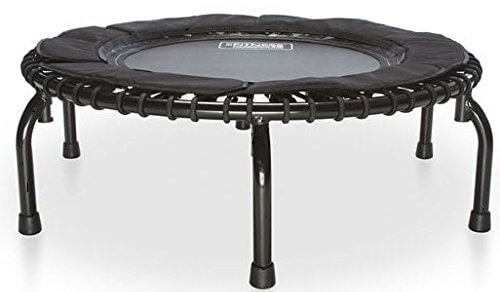
- 6 arched patented legs, sturdy and stable
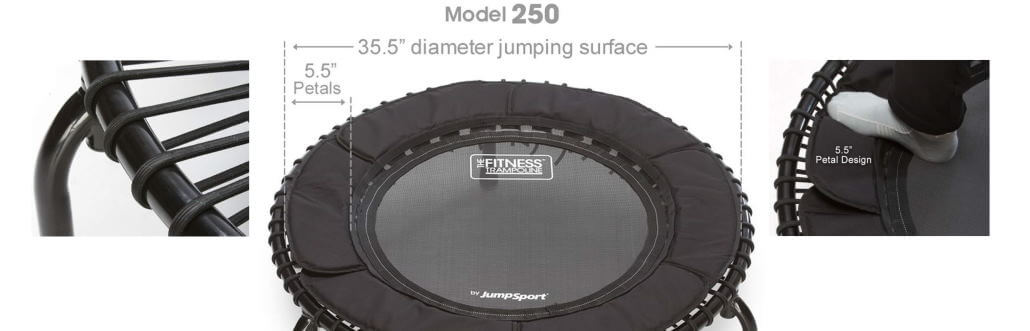
- Padded petals over cord attachments protect off-centre landings
- Tool-free ~10-minute assembly
Cons
- EnduroLast 2-Knot cords rated ~400K bounces, the 350's 4-Knot is rated ~1.2M (3x longer)
- No tension adjustment out of the box (only via cord upgrade)
- Does NOT fold, must stay assembled
- 35.5" usable jumping surface is small for taller / heavier users
- Handlebar sold separately
- For ~$70 more, the 350 ships with 3-setting adjustability + 275 lb capacity + 3x cord life
Full Review
The JumpSport 250 is a fitness rebounder built by JumpSport, Inc. out of San Jose, California. If that company name sounds familiar, it should. JumpSport is the parent company behind AlleyOOP, whose outdoor trampolines we’ve reviewed extensively on this site. Same engineers, same safety-first DNA, different product line. AlleyOOP handles the backyard. JumpSport handles the living room.
The 250 sits in the middle of JumpSport’s fitness rebounder lineup: better built than the entry-level 220/230, but missing the adjustable tension system that makes the 350 and above so versatile. Most review sites stop there and move on. We think that undersells the 250 significantly, because the frame is FlexBounce Ready, meaning you can upgrade the cords later without replacing the whole rebounder. That changes the value equation.
We’ve evaluated this rebounder using our weakest component methodology to work out who it’s built for, who should step up to the JumpSport 350, and who should look elsewhere entirely.
Key Specifications
| Specification | Detail |
|---|---|
| Frame diameter | 39 in (outer) / 41 in assembled (arched legs extend wider) |
| Usable jumping surface | 35.5 in (~985 sq in) |
| Assembled height | 12.5 in |
| Unit weight | 22 lbs |
| Weight capacity | 250 lbs |
| Frame material | 16-gauge steel, 2-coat black finish |
| Legs | 6 arched (patented design), non-removable |
| Cord system | 30x EnduroLast 2-Knot elastic cords |
| Cord bounce rating | ~400,000 cycles (see note below) |
| Tension adjustability | None out of box (FlexBounce Ready for cord upgrades) |
| Mat material | Permatron polypropylene, padded petal design |
| Foldable | No |
| Assembly | Tool-free, ~10 minutes |
| Warranty (frame/legs) | Lifetime |
| Warranty (mat) | 2 years |
| Warranty (other) | 1 year |
| Included extras | Workout DVD + 60-day streaming access |
| Optional handlebar | Yes, sold separately (quick-release) |
| Price (approx.) | Check current price |
A note on the bounce cycle rating. Several review sites and even earlier versions of this page list the EnduroLast 2-Knot cords at “1 million bounces.” That figure appears to be conflated from the 4-Knot cords used in the 350 and above, which are rated for around 1.2 million cycles. JumpSport’s own tier documentation indicates the 2-Knot cords are rated for approximately 400,000 cycles. Still a solid figure for daily home use, but three times fewer than the 350’s cords. We’d rather give you the accurate number than the impressive one.
EnduroLast Cords: What 2-Knot Actually Means
This is the section most review sites skip, and it’s the one that matters most when deciding between JumpSport models.
EnduroLast cords aren’t standard bungee cords. Each one is a multi-layer construction: high-density inner elastic strands wrapped in a woven polypropylene casing. They extend to about twice their resting length (more than most bungee systems), which creates a deeper, more controlled bounce that decelerates gradually rather than snapping you back.
The “2-Knot” label refers to how the cord attaches. A 2-Knot cord has a single fixed tension position. You install it, and that’s the bounce you get. No way to adjust firmness without swapping cords entirely.
The 4-Knot cords found on the JumpSport 350 and higher models offer multiple attachment positions. Pull the cord to a different knot and you tighten or loosen the bounce, giving you three to seven adjustable settings depending on the model. That’s a real functional difference, not just a marketing tier.
Both cord types are virtually silent. No metal-on-metal contact, no squeaking, no clicking. Users regularly report bouncing early mornings and late evenings in apartments and shared homes without any noise complaints. If you’ve ever owned a spring rebounder, the difference is dramatic.
The cords are replaceable and sold in sets of 30 directly from JumpSport. When they wear out (you’ll notice the bounce getting shallower over time), you replace the full set rather than individual cords.
FlexBounce Ready: The Upgrade Path Nobody Talks About
The 250 gets more interesting than its spec sheet suggests once you look past the stock configuration.
The frame is compatible with EnduroLast 3-Knot and 4-Knot cord upgrades. Buy the 250 today with its fixed-tension 2-Knot cords, and when you’re ready for adjustability, swap in a set of 3-Knot or 4-Knot cords for a modest sum without replacing the rebounder itself.
Previous versions of this page described “no adjustable tension” as a flat-out weakness. That’s only half the story. The 250 doesn’t ship with adjustability, true. But it ships on a frame that supports it. That’s a practical distinction for anyone on the fence between the 250 and 350. You can enter the JumpSport ecosystem at the entry tier and upgrade your bounce later, rather than committing the premium tier on day one.
The Bounce: Firm, Controlled, Quiet
The 250 provides a firmer bounce than you’d get from most bungee rebounders. The EnduroLast cords offer more resistance and a snappier return than, say, a bellicon Classic set to its softest tension. For fitness bouncing where you want responsiveness and some pushback, that firmness works in your favour. For gentle therapeutic rebounding where you want deep, slow deceleration, the 250 may feel stiffer than you’d prefer.
The 35.5-inch usable surface gives you enough room for standard fitness bouncing: jogging in place, jumping jacks, light cardio. Taller users (over 6 feet) and anyone doing aggressive lateral moves will feel the edges. This is a compact rebounder and it doesn’t pretend otherwise.
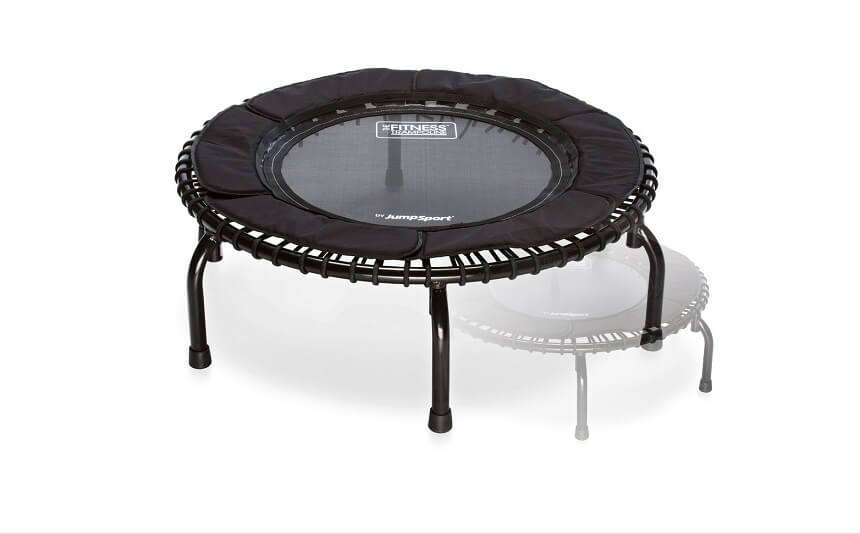
The padded petal mat design covers the cord attachment points. Notable detail for floor exercises. If you step off the jumping surface during a workout, you land on padding rather than exposed cord hardware. The entry-level 220/230 uses a flat skirt mat instead – slightly more usable jump area but no protection around the edges.
The JumpSport Model Lineup
The 250 doesn’t exist in isolation. Understanding where it sits in the range helps clarify who should buy it and who should step up.
| Model | Tier | Cords | Weight Limit | Adjustability | Bounce Cycles | Price |
|---|---|---|---|---|---|---|
| 220/230 | Essential | 30x 2-Knot | 250 lbs | None | ~400K | Check current price |
| 250 | Essential | 30x 2-Knot | 250 lbs | None (FlexBounce Ready) | ~400K | Check current price |
| 350 | Premium | 30x 4-Knot | 275 lbs | 3 settings | ~1.2M | Check current price |
| 350F | Premium Foldable | 30x 4-Knot | 275 lbs | 3 settings | ~1.2M | Check current price |
| 350 PRO | Pro (commercial) | 36x 4-Knot | 300 lbs | 7 settings | ~1.6M | Check current price |
| [570 PRO](/mini-trampolines/jumpsport-570pro-rebounder/) | Pro (large) | 36x 4-Knot | 300 lbs | 7 settings | ~1.6M | Check current price |
The 250 vs 350 Question
Every buyer asks this, and the answer depends on how long you plan to bounce.
For slightly more, the 350 gives you three things the 250 doesn’t have out of the box: 3-setting adjustable tension, a 275 lb weight capacity (25 lbs more), and 4-Knot cords rated for around 1.2 million cycles instead of 400,000. That’s three times the cord lifespan. Over two to three years of daily use, the 350’s cords will likely outlast two sets of 250 cords, which offsets the initial price difference.
The 350 is the better long-term buy. We don’t think that’s debatable. But the 250 makes sense if you’re new to rebounding and want to try the JumpSport system before committing further. Buy the 250, bounce on it for six months, and decide whether this is a habit that sticks. If it does, you can either upgrade the cords on your existing frame or step up to the 350 at that point. If it doesn’t, you’ve spent less finding out.
How It Compares to Competitors
| Feature | JumpSport 250 | JumpSport 350 | Fit Bounce Pro II | bellicon Classic | BCAN |
|---|---|---|---|---|---|
| Price | Check current price | Check current price | Check current price | Check current price | Check current price |
| Weight limit | 250 lbs | 275 lbs | 308 lbs | 260-330 lbs | 220-550 lbs |
| Cord/spring system | 30 EnduroLast 2-Knot | 30 EnduroLast 4-Knot | 30 bungee (60 connectors) | ~30 bungee (5 strengths) | Springs or bungee |
| Adjustable tension | No (upgradeable) | 3 settings | No | 5 pre-set strengths | No |
| Foldable | No | No (350F folds) | Half-fold | Fold-leg option | Quarter-fold |
| Noise level | Near silent | Near silent | Near silent | Near silent | Louder (spring models) |
| Best for | Entry-level quality rebounder | Regular users, long-term | Budget bungee, fold storage | Therapy, premium bounce | Budget entry |
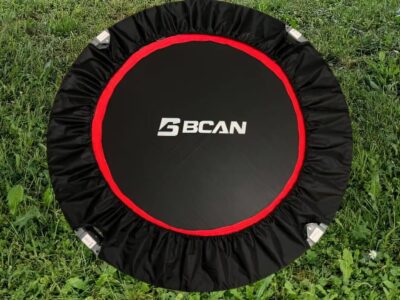
The Fit Bounce Pro II is the obvious price competitor. It costs less, folds for storage, supports up to 308 lbs, and arrives pre-assembled. On paper, it wins several categories. The JumpSport’s advantage is the EnduroLast cord system, which is a fundamentally different construction from standard bungee cords, and the FlexBounce upgrade path. If you plan to bounce for years and want a rebounder that grows with you, the 250 has a longer runway. If you need foldability or have a tight budget, the Fit Bounce Pro II is hard to argue against.
The bellicon Classic costs roughly twice as much and offers five pre-selected cord strengths tailored to your body weight. It’s the premium option for therapeutic rebounding. For general fitness, the gap between a bellicon and the JumpSport 250 doesn’t justify the price difference for most buyers.
For a broader comparison, see our best mini trampolines roundup.
Who This Is For
Daily fitness bouncers on a moderate budget. You want something better built than a budget Amazon rebounder but you’re not ready to spend the premium tier on a 350. The 250 delivers genuine JumpSport build quality at the lowest price in their lineup that includes the padded petal mat.
People new to rebounding. If you’re not sure whether you’ll stick with it, the 250 is a smarter entry point than the 350. The FlexBounce Ready frame means you aren’t locked into the 2-Knot cords permanently.
Users with joint concerns. The EnduroLast cord system absorbs impact without the jarring rebound of springs. Buyers with knee, hip, and lower back issues consistently report comfortable sessions on JumpSport rebounders.
Apartment dwellers who can’t fold. The 250 doesn’t fold, which is its biggest practical limitation. But at 22 lbs and 41 inches assembled, it slides behind a sofa or leans against a wall. If you have a dedicated corner for it, the non-folding design isn’t a dealbreaker.
Who Should Look Elsewhere
Anyone over 250 lbs. The weight limit is firm. The 350 supports 275 lbs, and the Fit Bounce Pro II handles 308 lbs.
Anyone who needs foldable storage. The 250 stays assembled. If closet space is your constraint, look at the 350F (foldable) or the Fit Bounce Pro II (half-fold).
Anyone who wants adjustable tension on day one. The FlexBounce upgrade path is real, but it does require buying additional cords. If you know you want multiple tension settings from the start, the 350 gets you there without the extra step.
Optional Handlebar
JumpSport sells a quick-release handlebar separately for the 250. It clips onto the frame without tools and provides vertical support for balance work, rehabilitation, and older users who want added stability. If balance or mobility is a concern, it’s worth adding. Price varies by retailer, so check at the time of purchase.
Our Verdict
The JumpSport 250 is the best entry point into the EnduroLast cord ecosystem. It’s not the best rebounder JumpSport makes, and it won’t pretend to be. The 2-Knot cords lack adjustability, they’re rated for fewer cycles than the 350’s 4-Knot system, and the weight limit tops out at 250 lbs.
What it gets right is the fundamentals. The 16-gauge steel frame carries a lifetime warranty. The EnduroLast cord system is quieter, smoother, and more durable than standard bungee. The padded petal mat protects you around the edges. And the FlexBounce Ready frame means you aren’t buying a dead-end product.
At its price point, the 250 delivers build quality that budget rebounders can’t match and an upgrade path that justifies choosing it over the slightly cheaper competition. If rebounding becomes a long-term habit, you can upgrade the cords or step up to the 350 or 570 PRO. If it doesn’t stick, you’ve kept your initial spend reasonable. Either way, you’ve bounced on something well-made.
Frequently Asked Questions
How long do EnduroLast 2-Knot cords last?
JumpSport’s tier documentation rates the 2-Knot cords at approximately 400,000 bounce cycles. For daily home use (20-30 minutes per session), that translates to roughly 2-3 years before tension loss becomes noticeable. You’ll feel the bounce getting shallower gradually rather than anything breaking suddenly. Replacement cords are sold in sets of 30 from JumpSport directly.
Can you adjust the tension on the JumpSport 250?
Not out of the box. The 250 ships with 2-Knot cords that have a single fixed tension. However, the frame is FlexBounce Ready, meaning you can purchase and install EnduroLast 3-Knot or 4-Knot cords later to add adjustability. This typically costs the cost of a set of 30 replacement cords.
Is the JumpSport 250 or 350 a better buy?
The 350 is the stronger long-term purchase. For slightly more, you get three adjustable tension settings, a 275 lb capacity, and 4-Knot cords rated for around 1.2 million cycles (versus 400,000). If you know you’ll bounce regularly, the 350 pays for itself in cord longevity alone. The 250 makes more sense for first-time buyers who want to test rebounding before committing further.
Is the JumpSport 250 quiet enough for an apartment?
Yes. The EnduroLast cord system produces virtually no noise during use. There’s no metal-on-metal contact, no creaking, and no squeaking. People in apartments and shared homes regularly report no noise complaints from neighbours, even during early morning and late evening sessions.
Does the JumpSport 250 fold for storage?
No. The 250 stays assembled once you set it up. At 22 lbs and 41 inches across, it’s light enough to move easily, but it won’t collapse into a closet. If foldability matters, look at the JumpSport 350F or the Fit Bounce Pro II.
What’s the difference between JumpSport and AlleyOOP?
Same company. JumpSport, Inc., founded by Mark Publicover, makes both product lines. JumpSport covers indoor fitness rebounders (the 220 through 570 lineup). AlleyOOP covers outdoor recreational and performance trampolines (the DoubleBounce, PowerBounce, and VariableBounce systems). If you’ve read our AlleyOOP reviews and trusted the engineering, the JumpSport 250 comes from the same team.
Product Photos
Price History
Price history (Amazon, last checked 18 Oct 2026, 17:15 UTC)
Get notified when the price drops
Set a target price and we'll email you when it's reached.